

Every marketing team has the same problem. There are more channels than ever, and every one of them wants fresh content.
Your blog needs posts. Your social accounts need something every day. Your email list expects a newsletter. Your ads need new headlines every couple of weeks.
AI content generation is how small teams keep up. Used well, it turns one idea into a week of content. Used badly, it fills the internet with bland copy nobody reads.
This guide shows you the good way. We'll cover the 6 types of marketing content AI handles best, a sample prompt for each, what a human should always check, and a simple weekly workflow you can start using today.
What AI Content Generation Means for Marketers
AI content generation simply means using AI tools to draft text, images, scripts and other marketing material. You give the tool a goal, some facts and a bit of direction. It gives you a first draft in seconds.
The important word there is draft. The best results come when AI does the heavy lifting and a person adds the judgment, the stories and the final polish.
If you want the bigger picture on why this works, we covered it in our post on the advantages of generative AI in content creation. Here we'll stay practical.
The 6 Types of Marketing Content AI Handles Best
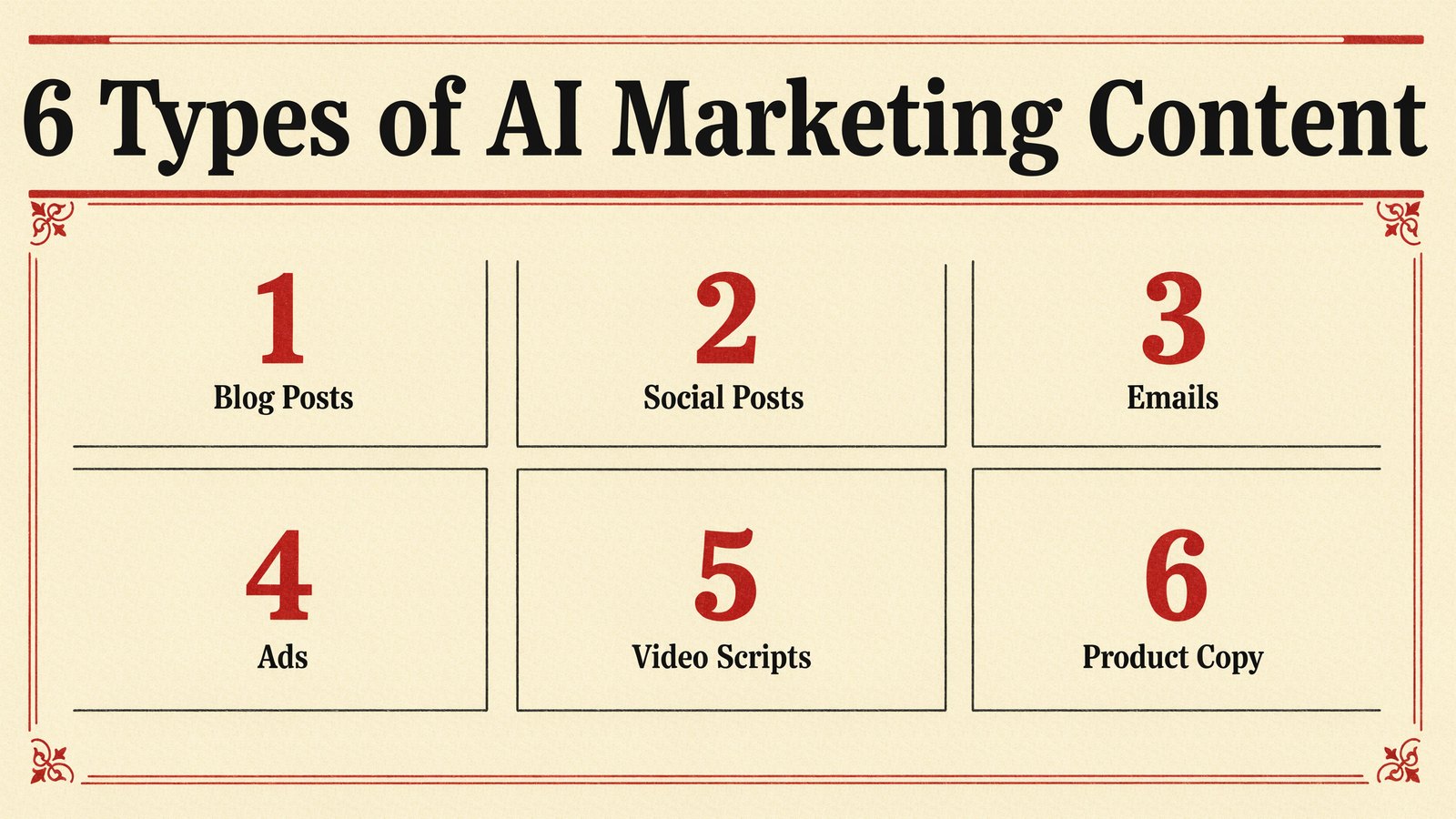
Not every kind of content is a good fit for AI. These six are, because they follow clear patterns and you can check the output quickly.
1. Blog Posts and Articles
Long-form content is where AI saves the most time. Research, outlines, first drafts and SEO details can take a writer a full day. AI can get you most of the way there in minutes.
What AI does well. Topic ideas, outlines, first drafts, meta descriptions, FAQ sections and internal link suggestions.
Sample prompt. "Write an outline for a 2,000 word beginner guide on choosing a CRM for a 5 person sales team. Include a short intro, 6 sections and a FAQ. Use simple language."
Human check. Add your own examples, check every fact and number, and make sure the post answers the reader's real question. For the full process, see our guide on how to write a blog post with AI.
2. Social Media Posts
Social media eats content. Most brands need several posts a week on several platforms, and each platform has its own style.
What AI does well. Turning one idea into many short posts, writing hooks, adapting length and tone per platform, and suggesting hashtags.
Sample prompt. "Turn this blog post into 5 LinkedIn posts. Each should open with a strong first line, share one idea and end with a question. No hashtags."
Human check. Read each post out loud. If it sounds like a press release, rewrite the first line in your own voice.
3. Emails and Newsletters
Email still brings some of the best returns in marketing. The hard part is writing often enough to stay in touch without sounding repetitive.
What AI does well. Subject line options, welcome sequences, newsletter summaries, follow ups and personalized versions for different segments.
Sample prompt. "Write a 3 email welcome sequence for new trial users of a project management app. Keep each email under 150 words, friendly and focused on one action."
Human check. Make sure every claim and offer is accurate, every link works and the email sounds like it came from a person, not a brand.
4. Ads and Landing Page Copy
Ads need constant testing. The more headline and text variations you can try, the faster you find the winners.
What AI does well. Dozens of headline variations, short ad text, calls to action, and landing page sections that match the ad.
Sample prompt. "Write 10 Facebook ad headlines under 40 characters for a meal kit service aimed at busy parents. Focus on time saved, not price."
Human check. Check every claim against ad platform rules. Remove anything that overpromises.
5. Video Scripts
Video keeps growing on every platform, but a good video starts with a good script. AI is great at turning ideas into short, structured scripts.
What AI does well. Hooks for the first few seconds, short scripts for Reels and Shorts, YouTube outlines and scene by scene shot lists.
Sample prompt. "Write a 45 second vertical video script that explains why small stores should collect customer reviews. Start with a hook, give 3 quick tips and end with a call to action."
Human check. Say the script out loud with a timer. Cut any line that sounds stiff when spoken.
6. Product Descriptions and Website Copy
Stores with hundreds of products need hundreds of descriptions. Writing each one by hand is slow and the quality drops after the first fifty.
What AI does well. Product descriptions from a list of features, category page text, About pages, FAQs and short benefit statements.
Sample prompt. "Write a 120 word product description for a stainless steel water bottle. Features are 750 ml, keeps drinks cold 24 hours, leakproof lid. Audience is hikers. Lead with the benefit."
Human check. Double check sizes, materials and specs. A wrong detail here causes returns.
Turn One Piece Into Ten
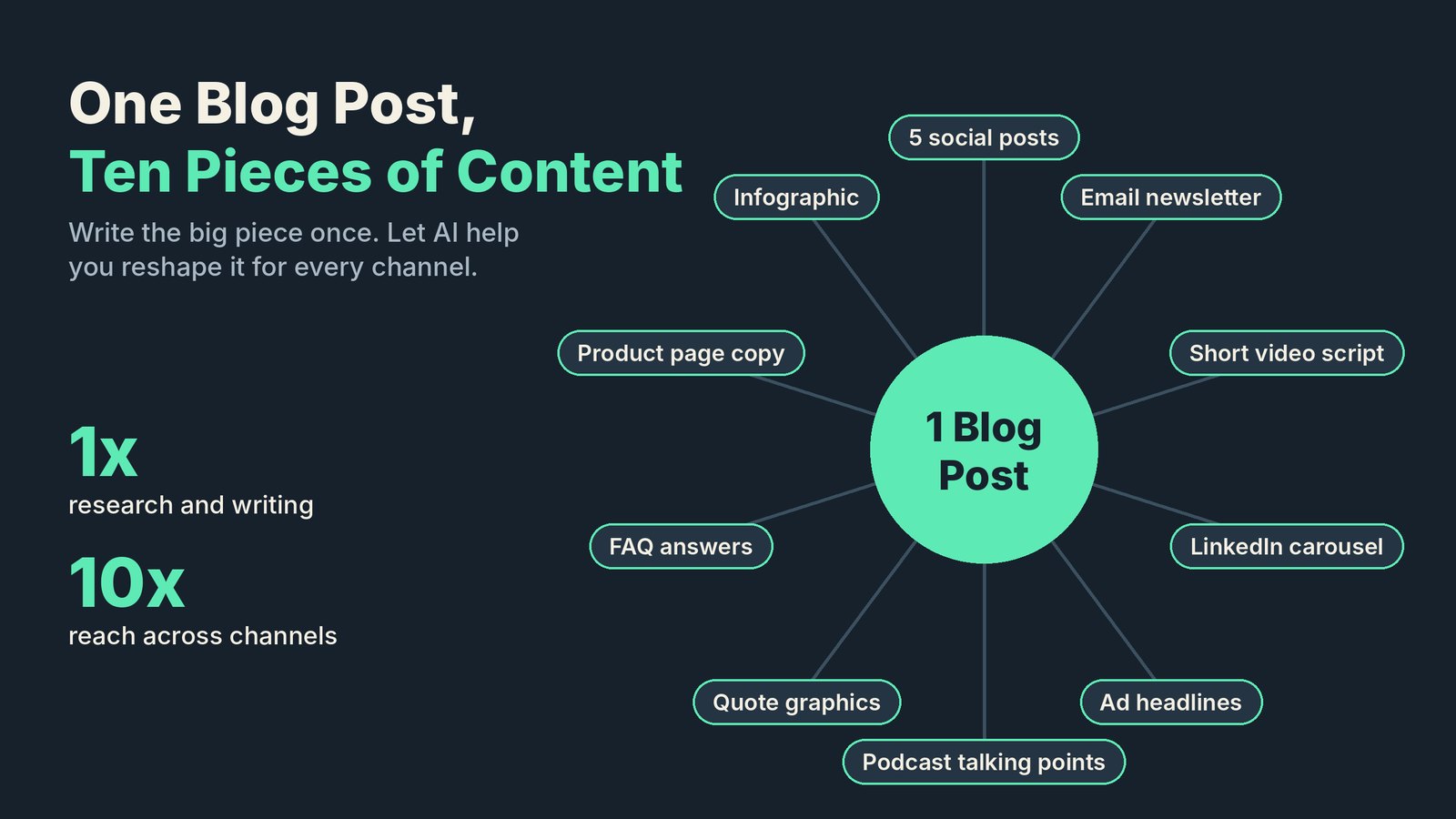
The smartest way to use AI content generation is to create one strong piece and then reshape it.
Start with a blog post. It holds your research, your ideas and your examples. Then ask AI to turn it into social posts, a newsletter, a video script, a carousel, ad headlines and FAQ answers.
You only do the deep thinking once. Every other piece stays consistent because it comes from the same source. And each channel still gets content made for it.
A Simple Weekly AI Content Workflow
Here's a workflow a small team, or a solo founder, can run every week.
- Monday, pick one topic. Choose a question your customers ask often. Check what already ranks in search.
- Tuesday, create the main piece. Use AI to research, outline and draft a blog post. Add your stories and edit it properly.
- Wednesday, repurpose. Turn the post into 5 social posts, one email and one short video script.
- Thursday, review and schedule. Read everything once more. Schedule posts across the week.
- Friday, look at the numbers. Note what got clicks, replies and shares. Use it to pick next week's topic.
That's one topic a week turned into a full week of content across every channel. Over a year, it adds up to 52 solid posts and hundreds of supporting pieces.
How Blogi Helps With AI Content Generation
Blog posts are the foundation of the workflow above, and they also take the most time. That's the part Blogi automates.
Blogi is a multi-AI autoblogger. It uses 7 different AI models to write articles on any topic or keyword you give it. Then it posts them to your blog for you, with SEO already handled.
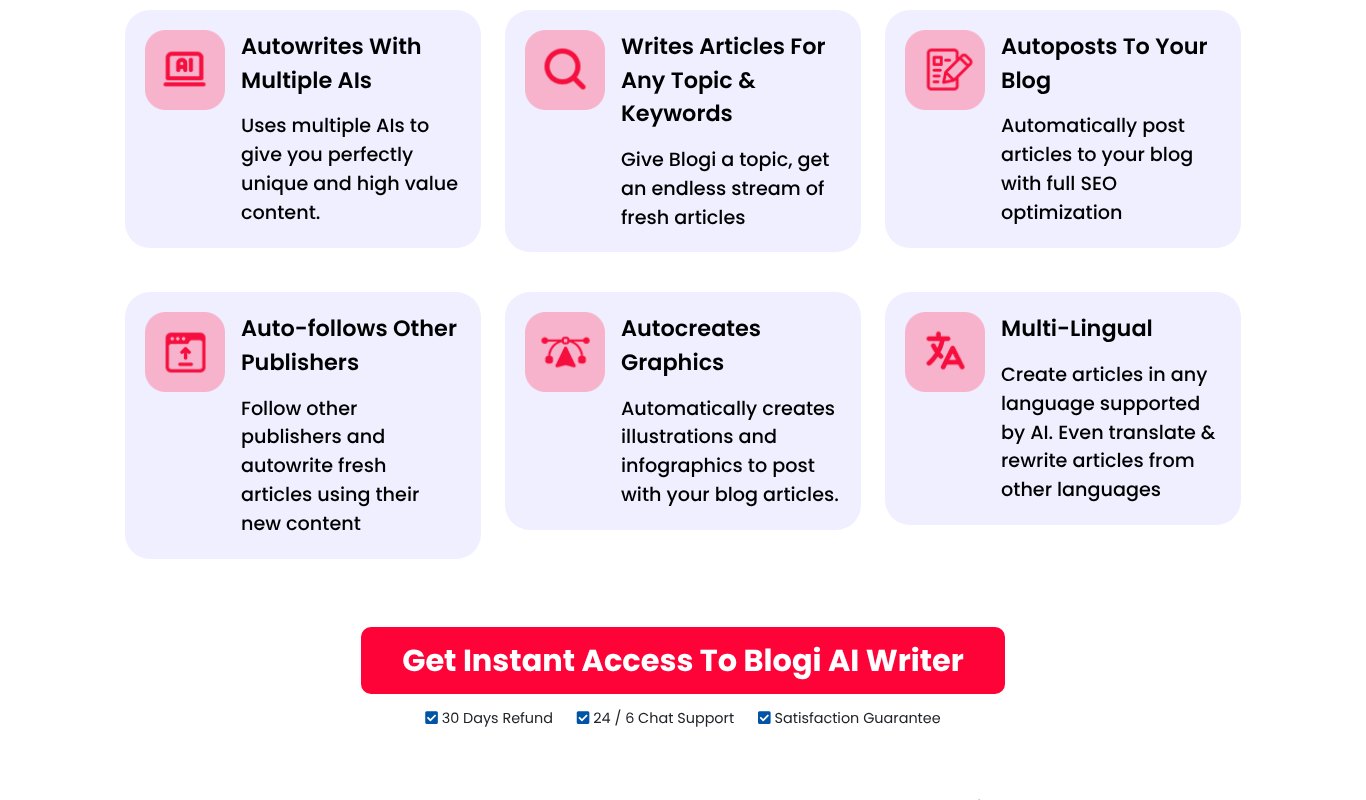
- Articles on autopilot. Give it your topics or keywords and it writes and publishes on a schedule.
- 7 AI models. Different models are good at different things, and Blogi uses them together for better results.
- Built-in SEO. Titles, headings and keywords are set up for search before the post goes live.
- Graphics included. It creates images and infographics for your posts automatically.
- Many languages. Write, translate or rewrite content in the language your audience speaks.
- Grows your reach. It can auto-follow other publishers in your niche to build visibility.
Blogi costs $5.58 a month, paid yearly ($67 a year), or $6.99 month to month. That's less than most writers charge for a single paragraph.
Once Blogi has your main posts covered, you can spend your time on the parts that need a human touch, like stories, opinions and talking to customers.
Guardrails That Keep AI Content Good
AI makes it easy to publish a lot. It also makes it easy to publish a lot of mediocre content. These simple rules keep your quality up.
- Check every fact. AI can state wrong numbers with total confidence. Verify stats, prices, dates and names.
- Add something only you know. A customer story, a result from your own business or a strong opinion. This is what makes content worth reading.
- Keep a style guide. Write down your tone, words you use and words you avoid. Paste it into your prompts.
- Edit for voice. Our post on how to humanize AI content has 10 simple ways to do it.
- Be open about it where needed. Some platforms and industries expect you to say when AI was used. Follow their rules.
- Don't publish everything. If a draft isn't helpful, delete it. Fewer good posts beat many weak ones.
Writing Better Prompts for Marketing
The quality of AI content depends a lot on the prompt. A good marketing prompt answers five simple questions.
- Who is it for? Name the audience, like busy parents or first time founders.
- What should they do? Click, reply, buy, sign up or just learn something.
- Where will it appear? A blog, LinkedIn, an email or an ad all need different lengths and styles.
- What facts must it use? Paste in features, prices and proof so the AI doesn't guess.
- How should it sound? Friendly, direct, expert or playful. Add a sample of your best writing.
Save your best prompts in a shared document. Over time it becomes a playbook your whole team can reuse.
How to Measure Your AI Content
Faster content only matters if it works. Track a few numbers for each type.
| Content Type | What to Track | A Good Sign |
|---|---|---|
| Blog posts | Search clicks, time on page | Steady growth in clicks month over month |
| Social posts | Comments, shares, profile visits | Real conversations, not just likes |
| Emails | Open rate, click rate, replies | People reply or click through |
| Ads | Click through rate, cost per lead | Lower cost as you test more variations |
| Video scripts | Watch time, completion rate | Most viewers watch past the hook |
| Product copy | Conversion rate, returns | More sales, fewer questions |
Compare AI-assisted content against what you made before. If numbers drop, look at the editing step first. It's usually where the problem is.
Common Mistakes to Avoid
- Publishing raw drafts. The first draft is a starting point, never the finished piece.
- Vague prompts. "Write a blog post about marketing" gets a generic result. Give the audience, goal, length and tone.
- Chasing volume over value. Ten thin posts won't beat one great one in search.
- Same voice everywhere. LinkedIn, Instagram and email each need their own style.
- Forgetting the customer. Every piece should answer a real question your audience has.
Tools Worth Knowing
You don't need a dozen tools. One general AI assistant plus a tool for your biggest job is usually enough. If blogging is your biggest job, take a look at our list of AI blogging tools for a comparison of the main options.
Whatever you use, the workflow matters more than the tool. Pick one, build the habit, and improve your prompts as you go.
FAQ
Is AI-generated content bad for SEO?
No. Google has said it rewards helpful content no matter how it's made. Content that's thin, wrong or made only to rank is what gets hurt, whether a person or AI wrote it.
Which type of content should I start with?
Start with blog posts or emails. They take the most time by hand and are easy to repurpose into everything else.
How much editing does AI content need?
Plan on spending about a quarter of the time you'd spend writing from scratch. Most of it goes into adding examples and fixing tone.
Can AI write in my brand voice?
Yes, if you show it how. Share a few examples of your best content and a short style guide in your prompt, and the output gets much closer.
Final Thoughts
AI content generation isn't about replacing marketers. It's about giving a small team the output of a big one.
Focus on the six types that work, create one strong piece each week and reshape it for every channel. Keep a human in charge of facts, stories and voice.
And if you want your blog to keep growing while you focus on everything else, try Blogi and let it handle the writing and posting for you.